A stain, a drip or a damp attic near Verona
Roof Leak Repair in Verona, NJ
A brown patch on the ceiling, a drip in the attic or a damp wall after rain usually points to a spot where water got past the roof covering. Call (862) 396-4866 and ask about a visit time to trace it.

What changes the size of the job
What makes one leak a small job and another a large one
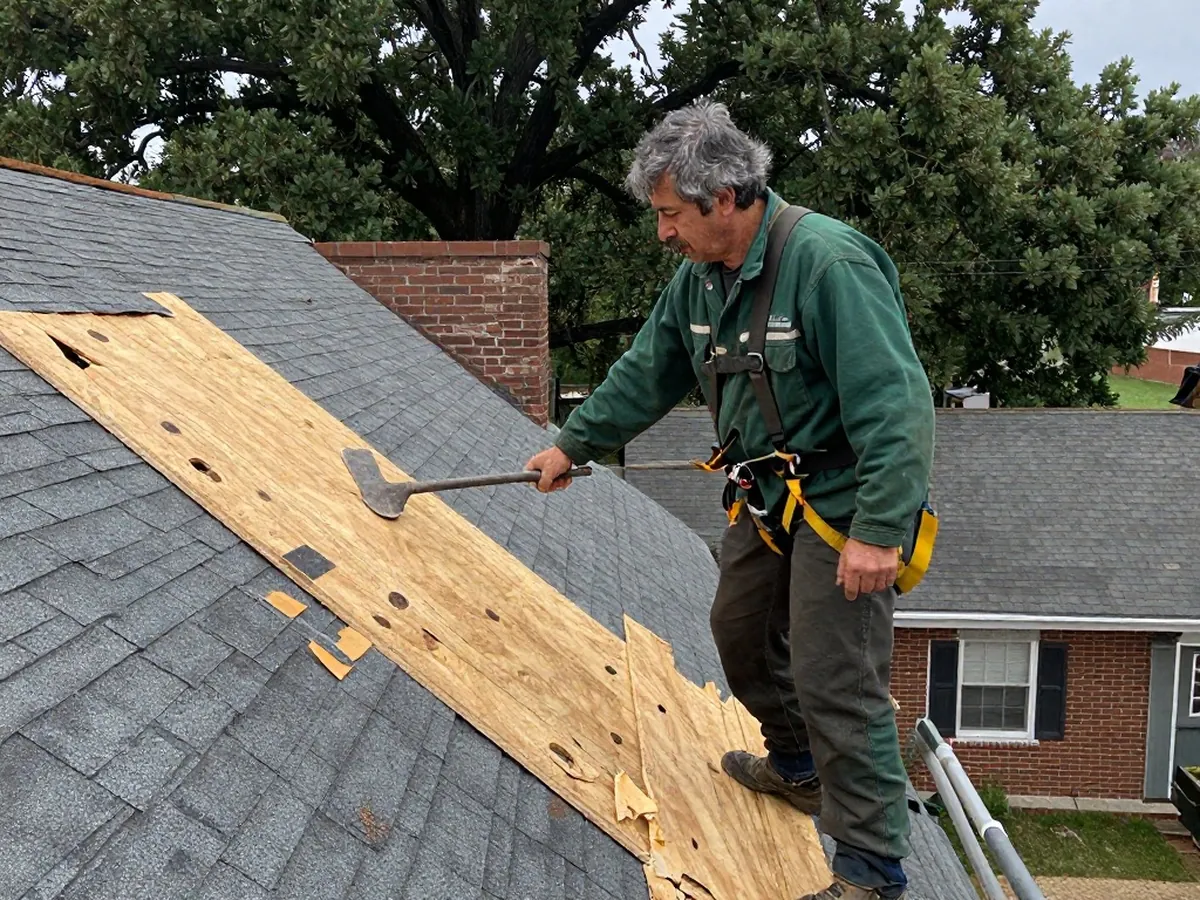
The list is short. Distance matters first: water that ran down a rafter before it dripped through a ceiling is harder to trace than a drip under a single shingle. Time matters next. The repair brief from the Department of Energy says wet insulation comes out so a ceiling can dry, and that damaged roofing is removed down to the sheathing, the boards under the shingles. Roof pitch, height and access change the work. So does the entry point itself, whether a lone lifted shingle, a worn pipe collar or a stretch of failed flashing. The contractor can sort these out in the attic and on the roof, then lay out the options.
Stop and step back if
- Drips at a light fixture, or a ceiling that bulges or sags: step outside and call 911.
- Water running down an inside wall toward an outlet or the breaker panel: keep away from both and call 911.
- A wire hanging low or lying in the yard: stay well back and call 911 or your electric company.
- A wet or windy roof: do not climb up, and do not set a ladder near overhead wires. Look from the ground.
This job and its partner
When a leak points to a bigger decision
The same Energy brief quotes a 2003 field guide with a 10 percent line: when more than a tenth of the old roof needs work, that guide recommends a new roof. It is one trade rule of thumb, and it says nothing about your particular roof. A single leak at one pipe collar sits at the repair end. Leaks in several spots, soft decking or shingles that crumble point the other way. Roof replacement covers that side, and the repair or replace page gathers the rules of thumb in one place.

What to look at
Reading the attic side of the roof
The roofing manufacturers' association points inspectors to the roof deck's underside, where water stains show, especially around flashing. With a flashlight from the hatch, note where the dark patch sits and measure to a landmark such as the chimney or a vent pipe. A stain beside a landmark gives the contractor a place to start outside. A long, thin trail running downhill from a spot higher up suggests the water traveled before it showed. Photograph both, with the date. If the ceiling below the stain sags, FEMA's tips for returning to a flood-damaged home note that water may be trapped above it, which is a reason to leave the room and call 911. When a ladder comes into play at all, NIOSH puts the minimum at ten feet from overhead power lines.
On a visit, in order
- 1
Call (862) 396-4866, describe the stain's spot and age, say whether rain makes it grow, and ask for a visit to have the water traced.
- 2
The contractor can start inside, following the stain up through the ceiling to the attic side of the roof deck, which is the layer of boards the shingles are nailed to.
- 3
Outside, the look moves to lifted or missing shingles, cracked rubber collars around vent pipes, and the metal where the roof meets a wall or chimney.
- 4
Damp insulation and stained boards show how far the water traveled, so the contractor can tell whether the entry point sits above the stain or well uphill from it.
- 5
The contractor can then explain the options, from replacing a few shingles to rebuilding a flashing joint, and what each option leaves alone.
- 6
Paperwork comes last: which repairs need a town permit and which do not. The paperwork page has the Verona rules.
The parts involved
Five parts a leak usually runs through
Shingles carry off the bulk of the rain. Below them is the underlayment, a felt or peel-and-stick sheet that the Energy brief says limits water intrusion once shingles are lost. Flashing is the bent metal at chimneys, walls and valleys, and the roofing manufacturers' association lists flashings among a roof's weakest points. A pipe collar is the rubber seal around a vent pipe. The deck lies under it all. A leak can start in any of the five and show up in another.
Signs to look for
- A brown or yellowish patch spreading across a ceiling after rain
- Drips or beads of water on attic wood below the roof boards
- Paint bubbling or peeling on an upstairs wall under a roof edge
- Insulation in the attic that looks dark, heavy or clumped
- A missing shingle or a bare, shiny patch seen from the yard
Paperwork pointer
Does a leak repair need paperwork?
On shingles alone, Verona asks for no permit, according to the township's building FAQ, while the boards under them (sheathing) do bring one. A state rule on ordinary maintenance goes further. It treats roof covering work on a house standing alone with one or two dwelling units, from a few shingles to a whole replacement, as needing no permit and no inspections. Both are laid out on the paperwork page, beside the other three town offices. Call (862) 396-4866 with a question about your own address.
Have this ready
Write down the address, what is visible from the ground and the roof's age if known, then call (862) 396-4866. Tenants start with the landlord. Towns covered: Verona, Cedar Grove, North Caldwell, West Orange.