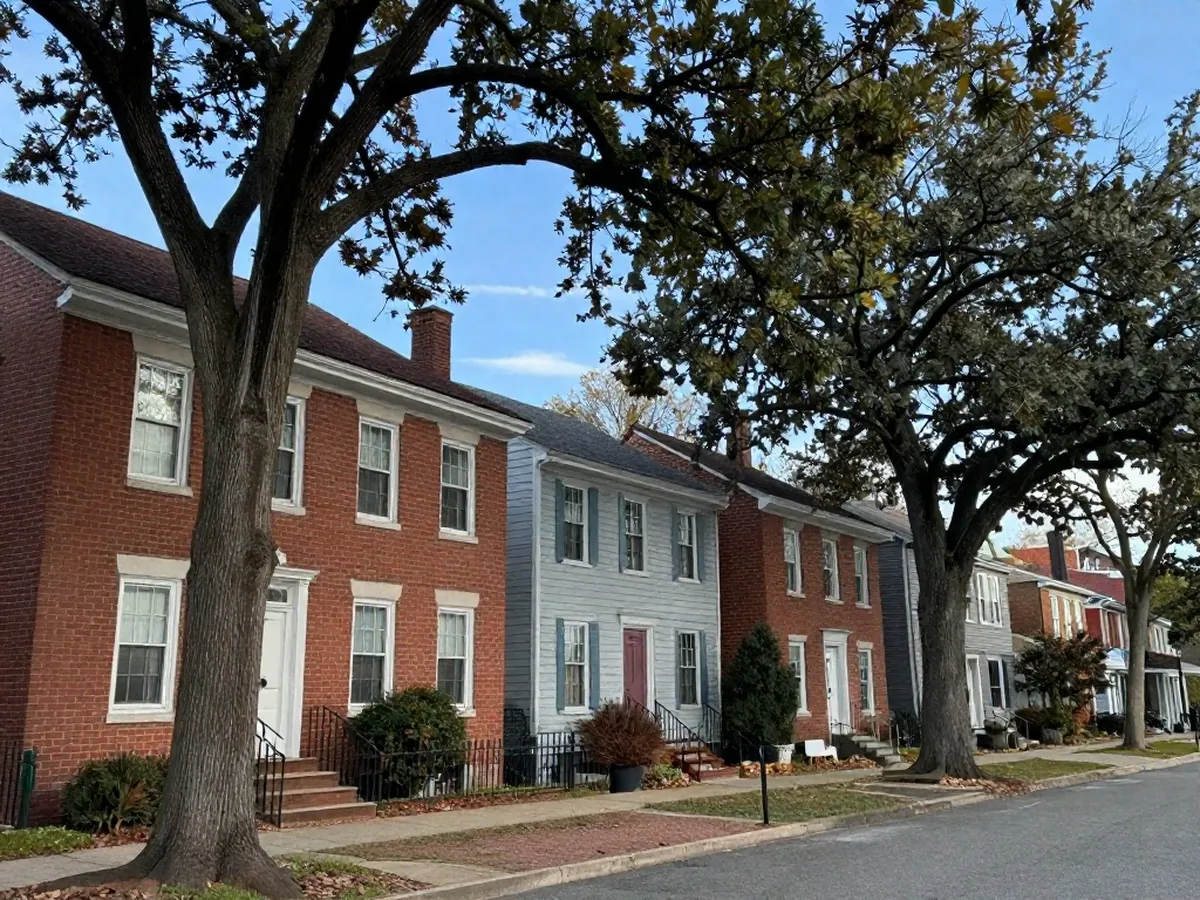
October and November: leaves reach the gutters
October's normal high at the Caldwell airport station is 64.5 degrees and its low 45.0. By November the average low is 35.4, and leaves are down. The Park Service's slate-roof brief advises cleaning gutters at least twice in fall and once in early spring, advice written for slate roofs.
Rainfall does not let up: October averages 3.97 inches and November 3.30.
December through February: the long freeze
December averages a 43.0 high and a 27.7 low, January 38.3 and 22.9, February 41.4 and 23.9. Highs above freezing by day and lows below it by night are the recipe for ice at the eaves, as the UMass guide explains.
A state bulletin on ice barrier membranes names Sussex County for its January-temperature rule. January's normal average here is 30.6 degrees. Do not chip ice or climb a snowy roof.
March: thaw and freeze trade places
March averages a 49.4 high and a 31.3 low, with 4.07 inches of rain, more than January or February. Winter's damage shows up now. Look from the ground for lifted shingles, bent gutters and fresh stains on ceilings. The Park Service advises an inspection every year and another after severe storms.
April through June: the first full look
April's average high is 61.9 and its low 41.0. May reaches 72.1 and 50.9, June 80.5 and 60.3, with 3.71, 3.39 and 4.27 inches of rain. It is the season for the early-spring gutter cleaning and for the annual look from the ground. Write down what you see and the date, then keep the notes with the roof papers.
July through September: heat and the storms on record
July's average high is 85.2 degrees, and Energy Department figures put a conventional roof at 150 degrees or hotter on a sunny summer afternoon. August is the wettest month at 4.49 inches. Two storms are on the record. Isaias, on 4 August 2020, knocked out power to over a million New Jersey customers. The remnants of Ida dropped 8.44 inches on Newark Airport during 1 and 2 September 2021.
All twelve months at the Caldwell station
| Month | Average high and low (degrees F) | Rain (inches) | One roof job |
|---|---|---|---|
| January | 38.3 and 22.9 | 3.04 | Watch the eaves for ice from the ground |
| February | 41.4 and 23.9 | 2.55 | Look for thaw stains on upstairs ceilings |
| March | 49.4 and 31.3 | 4.07 | Walk the house and check for winter damage |
| April | 61.9 and 41.0 | 3.71 | Clean the gutters once, early in spring |
| May | 72.1 and 50.9 | 3.39 | Check flashing at the chimney from the yard |
| June | 80.5 and 60.3 | 4.27 | Walk the downspouts after a rain |
| July | 85.2 and 66.0 | 4.33 | Look for curling or cracked shingle edges |
| August | 83.6 and 64.2 | 4.49 | Check the roof after any hard storm |
| September | 76.0 and 56.7 | 3.72 | Photograph limbs that overhang the roof |
| October | 64.5 and 45.0 | 3.97 | Clean the gutters as leaves start to fall |
| November | 53.4 and 35.4 | 3.30 | Clean them again once the leaves are down |
| December | 43.0 and 27.7 | 4.04 | Check the attic hatch seal before the deep cold |
Where is your roof on this calendar?
Late fall suits a roof inspection, and midwinter is when ice dam damage shows itself. Whatever the month, call (862) 396-4866 about a visit, with the address and the roof's age to hand. Your street may run warmer or colder than the station.