Metal at chimneys, walls and valleys near Verona
Chimney Flashing Repair in Verona, NJ
Flashing is the bent metal where a roof meets a chimney, a wall or a valley, and a leak often starts there. Call (862) 396-4866 about a visit to check the joints around the chimney.
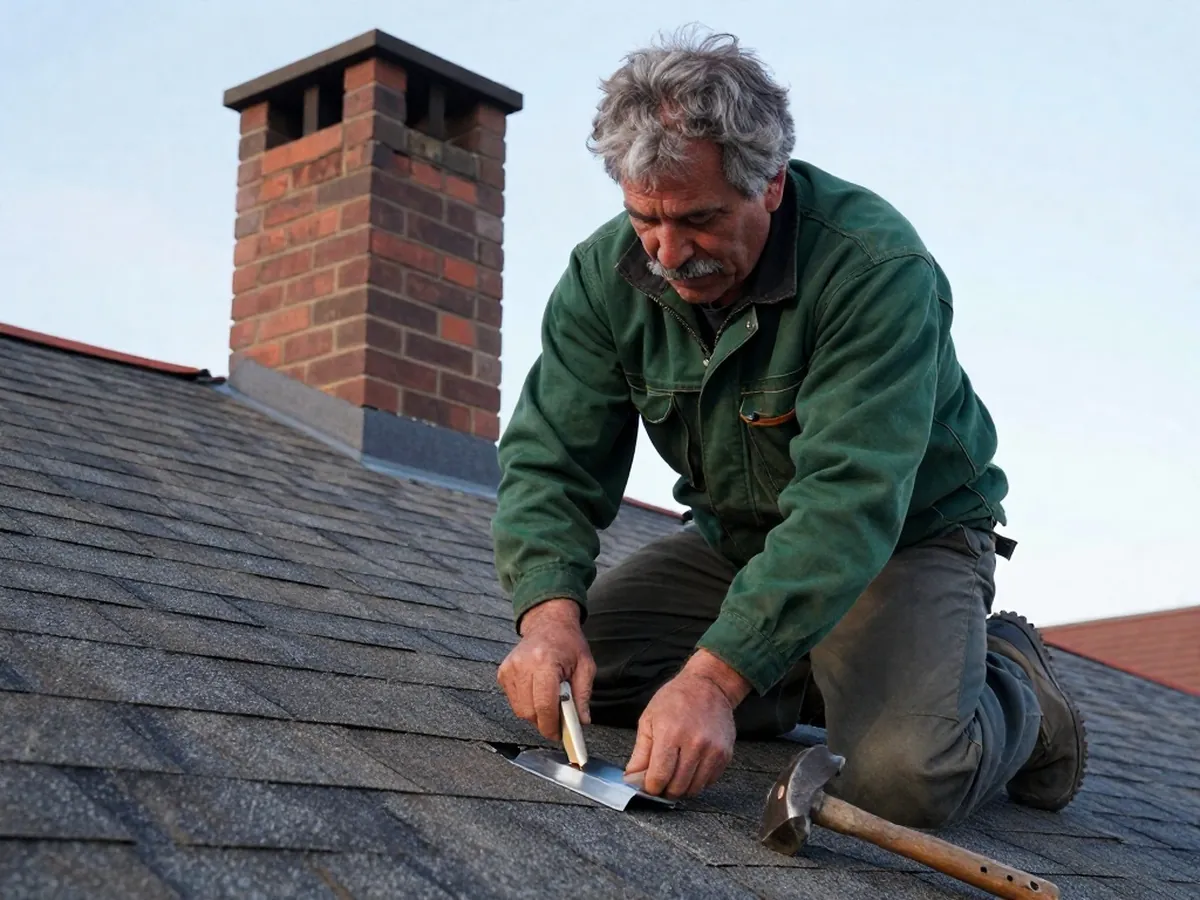
What changes the size of the job
Why one corner can be a small job and a full chimney a larger one
Scope follows how many sides of the chimney leak and how much metal has worn. The condition of the masonry next to it matters, since flashing cannot seal to crumbling mortar. Access and height change the work. The Park Service notes on slate roofs that metal flashings often wear out before the slate does, which shows why flashing comes up so often as the first thing to renew when a roof is otherwise sound.
Stop and step back if
- A chimney that leans or drops brick: keep everyone away from below it and call 911.
- Smoke, a scorched smell or a carbon monoxide alarm sounding near a fireplace or furnace flue: go outside and call 911.
- A ceiling that sags or drips near a light fixture: leave the room and call 911.
- Do not climb a wet roof to reseal metal yourself. Ladders near wires and slick shingles cause falls and shocks.
This job and its partner
Metal at the wall or a seam in the open field
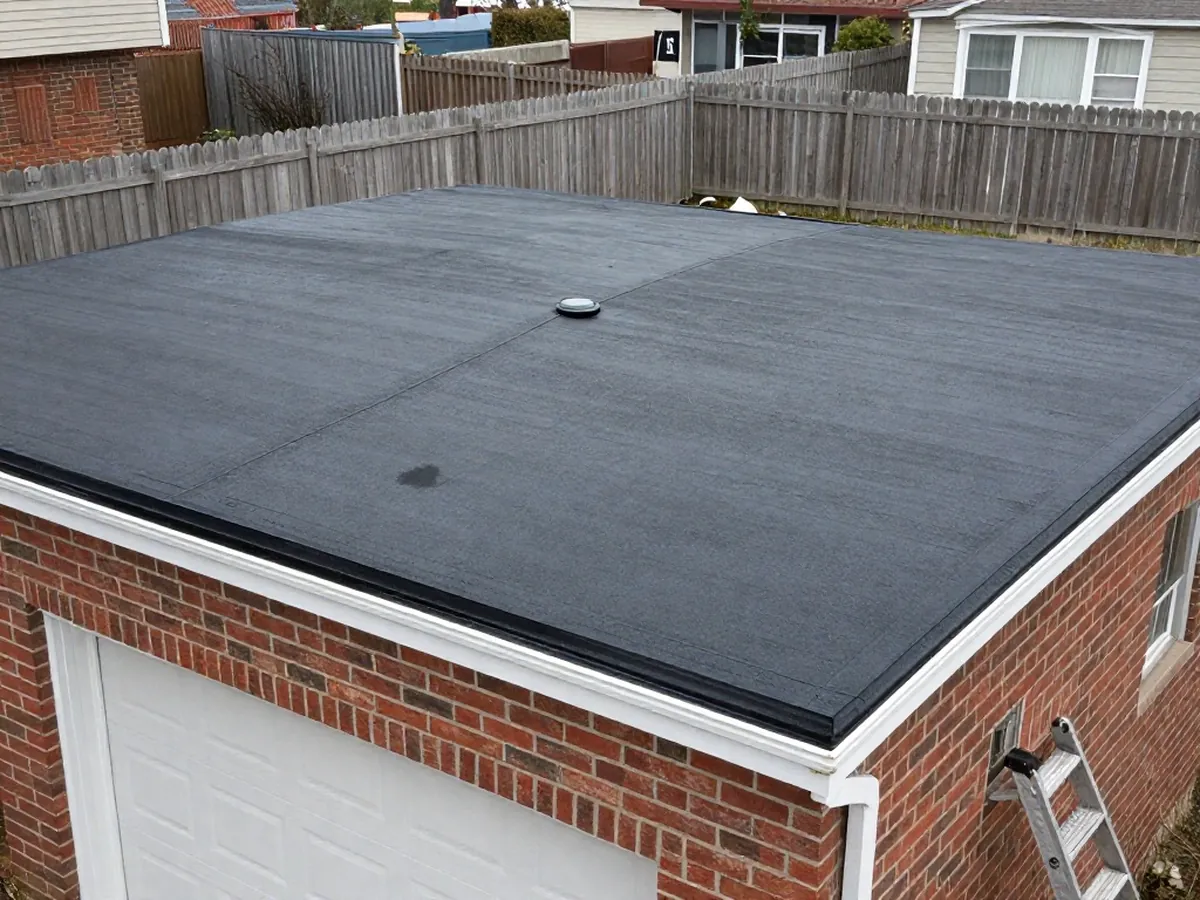
Chimney and wall flashing is one of two ways water gets in at a joint. The other is a seam or low spot out on a flat roof. The partner job is flat roof repair. A stain beside the chimney points here, and a stain under a puddle far from any wall points there. Both can be present on a house with an addition. The contractor can look at each joint.
What to look at
How the metal layers with the shingles
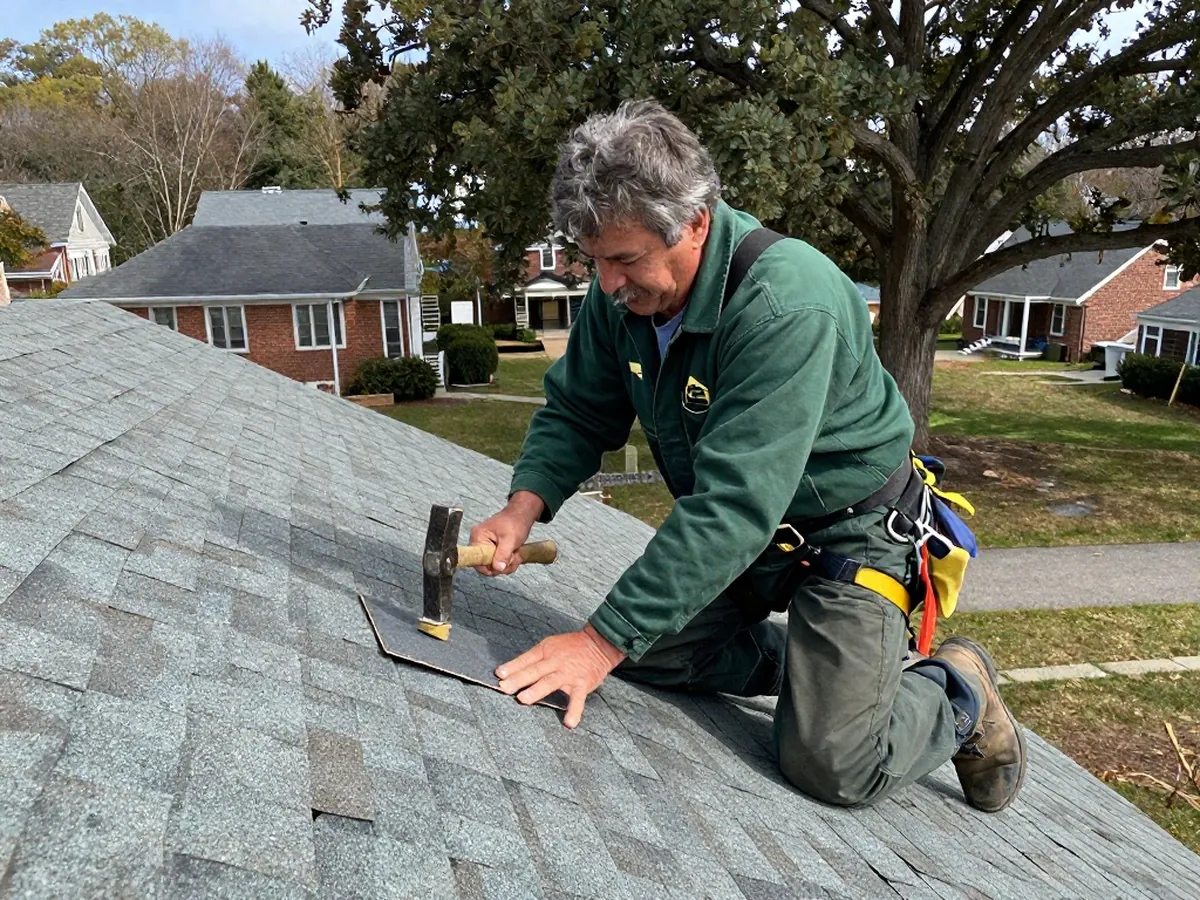
Step flashing goes in as the shingles do: a piece of metal, a course of shingles over its lower edge, the next piece higher, up the side of the chimney. Counterflashing then laps over the top, set into a mortar joint, so rain sliding down the brick meets metal instead of the gap behind it. Building America shows the same layering. The order matters more than the material, and a patch of sealant over a gap is not the same repair.
On a visit, in order
- 1
Call (862) 396-4866, say where the stain appears relative to the chimney or wall, and ask for a look.
- 2
The contractor can look from the ground first, then at the base: step flashing, the stepped pieces woven into the shingle courses, with counterflashing above it.
- 3
Building America describes step flashing along a chimney layered with the shingles and topped by counterflashing set into a brick mortar joint.
- 4
At walls, the look covers step and kick-out flashing, which the same source shows extending at least 4 inches up the wall above the roof deck.
- 5
The masonry above the roof, its mortar joints and any sealant can be checked as well, since metal needs a sound surface to seal against.
- 6
Options and paperwork come last. The paperwork page explains what the state excludes from ordinary maintenance.
The parts involved
Step flashing, counterflashing and the kick-out
Step flashing is a stack of small bent pieces that follow the slope. Counterflashing is the cap piece that covers their upper edge. A kick-out is the angled piece set where a roof edge ends against a wall, turning water away from the siding and into the gutter. Building America lists step and kick-out flashing at every roof-wall intersection, extending at least 4 inches up the wall surface above the roof deck. The roofing manufacturers' association tells inspectors to look at the underside at every flashing point.
Signs to look for
- A stain on a wall or ceiling next to the chimney after rain
- Flashing that has rusted, opened at a seam or lifted from the masonry near the chimney foot
- Cracked sealant or crumbling mortar where metal meets brick
- Water marks on attic boards near the chimney or a wall joint
- Shingles lifted or stained along a wall that rises above the roof
Paperwork pointer
Chimneys, masonry and the paperwork question
The state's ordinary maintenance rule leaves out any work that affects structural or fire safety. Flashing alone is roof covering work. Rebuilding masonry or flue parts may raise the fire-safety question, and the construction office is the one to ask. Verona's FAQ separates shingle swaps, which need no permit, from sheathing repair, which does. The paperwork page lists all four town offices.
Have this ready
Write down the address, what is visible from the ground and the roof's age if known, then call (862) 396-4866. Tenants start with the landlord. Towns covered: Verona, Cedar Grove, North Caldwell, West Orange.